Are There Bats on Mackinac Island?
Yes, bats live on Mackinac Island. Visitors may see them flying near trees or water around sunset as they hunt insects. Bat populations across Michigan and North America declined sharply after the arrival of white-nose syndrome, especially among cave-hibernating species. This guide explains which Michigan bats may occur in the region, how the disease affected them, where visitors might watch safely, and what to do after possible contact.
Yes, and They Used to Be Everywhere
Mackinac State Historic Parks confirms that bats are among the animals visitors may encounter on Mackinac Island. Michigan’s bats are insectivores and often feed in forested areas near water. However, reliable island-specific population counts are not publicly available, so the article should not estimate how many bats once lived here or attribute changes in local insect numbers to a specific bat decline.
Which Bats Live on Mackinac Island
Michigan is home to nine bat species, all of which eat insects. Five are currently listed as threatened or endangered by the state. Several species occur in northern Michigan, but a visitor generally cannot identify a fast-moving bat accurately from flight alone. Without an island-specific survey, it is safest not to state which two species account for most Mackinac Island sightings.
The Little Brown Bat
The little brown bat, Myotis lucifugus, is one of Michigan’s cave-hibernating species and is listed as threatened by the state. It commonly feeds near forests and water and forms maternity colonies during summer. Michigan DNR guidance notes that bats can capture hundreds of mosquito-sized insects per hour. Little brown bats suffered severe population losses after white-nose syndrome reached Michigan.
The Big Brown Bat and Other Visitors
Big brown bats also occur in Michigan and sometimes use buildings for shelter. White-nose syndrome has affected bat species differently, but it is not accurate to say that big brown bats cannot catch the disease. Hoary, eastern red, and silver-haired bats are migratory tree-roosting species found in Michigan. Whether an individual bat is a resident or a migrant cannot usually be determined by casual observation.
What Happened to the Island’s Bats
White-nose syndrome is a fungal disease that has killed millions of bats across North America. It was first documented in New York during the winter of 2006–2007 and was confirmed in Michigan in 2014. The disease caused sharp declines among susceptible cave-hibernating bats. Publicly available statewide information supports a regional decline, but it does not establish a precise Mackinac Island population loss or rule out every other contributing pressure.
How White-Nose Syndrome Works
The cold-loving fungus grows on the skin of hibernating bats, especially their wings and muzzle. Infection disrupts normal hibernation and causes bats to awaken too often, rapidly using the fat reserves needed to survive winter. Some infected bats leave their shelters during cold weather and die from exposure or starvation. Mortality has been extremely high at some hibernation sites, although decline rates differ by species and location.
Why Recovery Is So Slow
Bat recovery can be slow because many species live relatively long lives and produce only one pup each year. That reproductive pattern limits how quickly a population can recover after a severe decline. The winter locations used by Mackinac Island bats have not been established in the sources reviewed, so visitors should not assume they migrate to a particular Upper Peninsula cave or mine.
Where Bats Roost on the Island
Mackinac Island contains forests, shoreline habitat, limestone formations, and many buildings that could provide shelter or feeding areas for bats. Summer roosts may occur in trees, bat houses, barns, bridges, and other structures. Visitors should never enter cracks or enclosed spaces to search for bats. The claim that Eagle Scouts installed six bat houses on the island in 2015 could not be verified from a reliable local source and has therefore been removed.
Where and When to Watch for Bats
Bats are most active around sunset and are commonly associated with forested habitat near water. On Mackinac Island, watch from a safe public location where open sky meets trees or shoreline. Do not enter caves, approach a roost, shine bright lights at bats, or disturb animals leaving a shelter. Sightings are never guaranteed, and seasonal activity depends on weather and insect availability. Our guide to the island’s nocturnal wildlife covers other creatures active after dark.
Are Bats Dangerous to Visitors?
Simply being near a flying bat does not transmit rabies. Michigan estimates that fewer than one percent of bats in the wild carry the virus, although bats submitted for testing show higher positivity because they are more likely to be sick or involved in an exposure. Never touch a bat with bare hands. If a bat is found in a room with a sleeping person, a young child, someone unable to report contact, or a pet, close the room if possible and promptly contact hotel staff and the local health department before releasing it.
How the Island Is Helping Bats Recover
Visitors can help bats by leaving roosts and bat houses undisturbed, keeping children and pets away from grounded bats, and reporting possible roosts through appropriate wildlife-monitoring programs. Mackinac Island limits most private motor vehicles and protects much of its land as state park, but those facts alone do not prove that local bat populations are recovering. The island’s wider conservation work offers additional ways for visitors to protect habitat.
Making Bats Part of Your Evening
The nice thing about bat watching is that it costs nothing and fits around everything else. Finish dinner downtown, walk out toward the water as the light goes, and spend twenty quiet minutes watching the sky above the treeline. It pairs naturally with the island’s other after-dark traditions, whether that is one of the full moon hikes that draw visitors up into the park or an hour at one of the best stargazing spots on the island. Seeing even one bat feels like a small piece of good news now, given what the species has been through. It also gives you a reason to be outside at the single most beautiful hour of a Mackinac day.
Conclusion
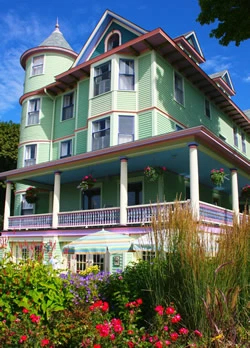
Bats may become active around sunset, sometimes while evening ferries are still operating. An overnight stay gives visitors more time to enjoy the island after dark without rushing for a departure. The Inn on Mackinac is located on Main Street in the Historic Marina District, just outside the heart of downtown. Explore its rooms and availability when planning a quiet evening that includes respectful wildlife watching from a public location.
Category: Mackinac Island