Are There Snakes on Mackinac Island
It is one of those questions people feel a little silly asking out loud, so they type it into a phone instead, usually the night before a trip. You are picturing a long bike ride around the shore, a picnic in the tall grass near British Landing, maybe a walk up through the woods to Fort Holmes, and somewhere in the back of your mind a small voice wonders what might be sunning itself on the path.
The honest answer is yes, there are snakes here, and they are one of the least worrying parts of your trip. Most visitors go a whole week without seeing one. The people who do see one usually describe a slim, striped ribbon slipping into the ferns before they could get a camera out. Here is what lives here, where you might cross paths, and what to do if you meet one.
Michigan is home to eighteen native snake species, and only one of them is venomous. The rest are small, shy animals that spend their lives eating slugs, worms, frogs and mice in places where people rarely look. Mackinac Island fits that same picture, since its mix of forest, meadow, rocky shore and damp low ground suits several of these species well. Snake encounters are uncommon because these animals normally avoid people. However, visitors should still follow ordinary trail precautions and never approach or handle a snake.
If you see a snake on the island, the odds are very good that it is a garter snake. This is the most familiar snake in Michigan and the one most people can picture without trying: a slim body two to three feet long, dark brown or green, with three pale stripes running head to tail. The stripes are usually yellow, though they can look cream, orange or even faintly blue depending on the light. Garter snakes like edges, so they turn up along stone walls, where a lawn meets the woods, and on warm rocks near water. They are harmless to people, they would far rather leave than argue with you, and their favourite meals are frogs, toads, slugs and worms.
A few smaller snakes make their living in shadier corners, and you would be lucky to spot any of them. The ring-necked snake is a slim, dark little animal with a bright orange or yellow band around its neck, and it spends most of its life under logs and flat stones. The smooth green snake is exactly what its name promises, a bright grass-green thread that hunts insects in meadows and vanishes the moment it stops moving. Eastern milk snakes, marked with reddish-brown blotches, are sometimes mistaken for something more dangerous, but they are harmless and welcome around barns because they eat mice. All of them would rather stay hidden, which is the general theme of the wildlife you might meet on Mackinac Island.
Michigan’s only venomous snake is the eastern massasauga rattlesnake, a small, thick-bodied species associated mainly with wetlands and nearby upland habitat. The Michigan Department of Natural Resources confirms that eastern massasaugas occur in specific wetlands on both Mackinac and Bois Blanc islands. They are threatened at the state and federal levels, and encounters are uncommon because the snakes are secretive and generally avoid people. Stay on established trails, watch where you place your hands and feet, keep pets close, and give any snake at least several feet of space. If a person is bitten, seek emergency medical attention immediately.
Where you are tells you a lot about what you might see. Snakes need warmth, cover and food, so they favour sunny openings next to thick plants. On Mackinac Island that means grassy edges along the inland roads, old stone foundations, brush piles, and low damp spots where frogs are easy to find. Busy downtown and the paved shore road are among the least likely places to meet one, simply because of all the bikes, horses and people. The quiet inland trails are the most likely spots, and they are also the best part of the island for seeing everything else, including the deer that wander the island’s interior.
Northern Michigan snakes keep a tight schedule. They come out of winter shelter in spring, spend a lot of early-season time basking to warm up, then feed and breed through summer before heading back underground in autumn. That gives you a simple window: late spring through early fall is when snakes are out, and October usually sends them looking for a crack or burrow to spend the winter. Mid-morning and late afternoon on a mild day are prime basking hours, since the animals are trying to warm up without overheating. On a hot July afternoon they are usually tucked into the shade instead.
The right response is pleasantly boring. Stop, take a step back, and let the snake move off on its own, which it will almost always do within a few seconds. Do not poke it with a stick, do not try to move it, and do not pick it up, even if you feel sure about what it is. Michigan regulates the take and possession of native reptiles, and several snake species—including the eastern massasauga—have additional legal protection. Attempts to handle or harm a snake also increase the risk of a defensive bite. Keep dogs on a short leash in brushy ground for the same reason, since a curious nose is far more likely to cause trouble than a passing hiker. If you want a photo, take it from several feet away with the zoom.
It is easy to forget that Mackinac Island is a working natural system rather than a stage set. Snakes sit in the middle of it, eating huge numbers of slugs, insects and mice while feeding hawks, herons and other hunters in turn. On an island where deer, birds, bats and small mammals all share a limited amount of ground, that balance matters. Seeing a green snake slide through the meadow grass or a garter snake basking on warm limestone is a small reminder that the quiet interior is very much alive, and the same woods come alive in a different way after dark, when a surprising cast of night animals takes over.
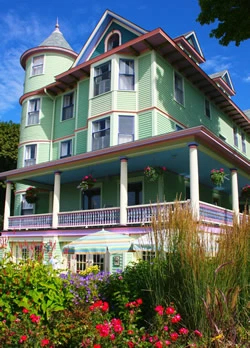
A good day of island nature-watching usually ends with tired legs, a full camera and a strong wish for a hot shower and a comfortable chair. That is where we come in. Inn on Mackinac sits right downtown, a short walk from the shore path and the trails that climb into the island’s quiet interior, so you can spend the morning in the woods and be back on the porch with a cold drink by mid-afternoon. If you are planning a trip built around trails, wildlife and long slow hours outdoors, book your stay with Inn on Mackinac and make the island’s wild side an easy walk from your door.
Category: Mackinac Island