How Mackinac Island’s Horses Get Their Shoes
Introduction
Spend an afternoon on Main Street and the sound of Mackinac Island hits you before the view does. Hooves on pavement, steady and unhurried, hour after hour. It is such a normal part of the island that most visitors stop noticing it by day two. But every one of those footfalls lands on a shoe that somebody shaped, fitted, and nailed on by hand, and that shoe will be worn out and replaced long before the season ends. Behind the carriages and the taxis there is a small, skilled trade keeping several hundred working horses sound on hard roads. Here is how it actually works.
Why Hooves Matter So Much on a Car-Free Island
Mackinac Island’s working horses spend many hours on paved streets. Motor vehicles were restricted in the late 1890s, leaving walking, bicycles, and horse-drawn transportation at the heart of island travel. That tradition helps create the island’s character, but it also makes regular hoof care essential. Carriage and freight horses work on firm surfaces and hills, so trained farriers must balance protection, traction, comfort, and each horse’s individual needs.
That changes everything about how these horses are shod. A shoe that would last a trail horse two months might last an island dray horse a few weeks. Traction becomes a safety issue rather than a performance detail, especially after rain, when painted crosswalks and worn asphalt turn slick. And because the island is an island, nobody can run to a supply store for a part they forgot. Farriers plan around what they can carry over on the ferry, which is part of why the local approach to shoeing has become so standardized and so practical.
Steel in Back, Rubber in Front
A published trade account of Mackinac Island farriery described a common setup using steel shoes on the hind feet and rubber- or urethane-covered steel shoes on the front. The added material can improve grip and reduce some of the impact created by paved roads. However, this is not a universal rule. Shoe type and placement vary with the horse, its job, hoof condition, workload, route, weather, and the farrier’s professional judgment.
Why the Front Feet Get Rubber
Horses normally carry more weight on their front limbs than their hind limbs, so front-hoof balance and protection receive close attention. A rubber or urethane covering can add grip on pavement and may help moderate impact. Depending on the horse, a farrier may also use pads or other materials. These choices are made case by case because too much grip or an unsuitable shoeing package can create different stresses.
Traction Beyond the Rubber
Rubber is not the only answer, and some horses need more help than others. Farriers sometimes add small amounts of hard-wearing tungsten carbide material, sold under names like Drill-Tek or borium, to the ground surface of a shoe. These additions bite into pavement the way a studded tire bites into packed snow, and they give a nervous or heavily loaded horse the confidence to lean into a hill without scrambling. It is a judgment call rather than a blanket rule. Too much traction can hold a foot in place when it ought to be allowed to slide a fraction, which puts strain on joints, so a good farrier matches the package to the individual horse and the route it works.
The Sheer Number of Shoes
The volume of work is the detail that usually surprises people. The Mackinac Island Tourism Bureau reports that more than 500 horses may be on the island during the visitor season. Because shoes must be checked, reset, or replaced according to each horse’s condition and workload, island farriers complete many individual fittings throughout the season. Exact shoe totals vary from year to year, so older published estimates should not be treated as a current fixed count.
Who Actually Does the Work
Shoeing on Mackinac Island is split between in-house staff and visiting professionals, and the division reflects the scale of the operation.
The Carriage Companies’ Own Crews
Large carriage operations coordinate barn staff, certified farriers, and veterinary care to support their horses. Current tourism information describes rotating veterinarians and certified farriers serving island horses, but staffing arrangements can change. Regular observation matters because a farrier or caretaker who knows a horse can notice changes in hoof wear, movement, or comfort and arrange appropriate care.
Farriers Who Come Over by Boat
Independent farriers also serve private owners, livery stables, and riding horses. A 2019 trade report described the planning required when tools and supplies must arrive by ferry. That logistical challenge remains part of island work, although individual farriers and service arrangements can change. Professionals therefore prepare carefully and bring the equipment needed for the horses scheduled that day.
Where Visitors Can Watch the Craft
You do not need an introduction to a farrier to see this work up close, because the island has made a small attraction of it.
Benjamin Blacksmith Shop
Downtown near the Biddle House, Mackinac State Historic Parks operates the Benjamin Blacksmith Shop as a historic working forge. A blacksmith demonstrates traditional techniques by shaping hot iron into items such as tools, hinges, and household objects. The site explains how the Benjamin family once repaired carriage wheels and shoed horses. Live horses are not shod during the present-day demonstrations, but the shop gives useful historical context for the island’s farrier tradition. Our guide to the Benjamin Blacksmith Shop explains what to look for.
The Working Shop at Surrey Hill
Up at Surrey Hill, near the carriage museum, there is a second blacksmith shop that sits closer to the modern trade. Visitors can watch the forge in action and then walk through a collection of antique carriages that were pulled by horses shod much the same way. The combination makes the connection obvious in a way a museum label never quite does: these vehicles were not decorative, they were working machines, and keeping them moving meant keeping feet sound. Our roundup of things to do at Surrey Hill explains how to fit it into a day.
When the Season Ends
Most of the island’s summer horses leave for mainland farms during the offseason, while a smaller group remains to support year-round transportation and deliveries. Hoof care continues through winter because hooves keep growing. Whether a horse remains shod, goes barefoot, or uses a different shoeing plan depends on its work, footing, hoof condition, and professional care plan. In spring, farriers help prepare returning horses for their seasonal jobs. Our winter-horse guide explains where many of them stay.
What to Notice on Your Next Carriage Ride
Once you know what to look for, a carriage tour gets more interesting. Watch how a driver eases a team into a turn rather than cutting it sharply, and listen for the change in sound when hooves move from asphalt onto a gravel shoulder. Glance at the front feet when a horse is standing still and see whether you can spot the rubber layer. Notice that teams get swapped out through the day rather than working straight through. None of this is on the script, but it is all part of the same system, and it tells you more about how the island really functions than any statistic. For the bigger picture, our overview of the horses of Mackinac Island is a good next read.
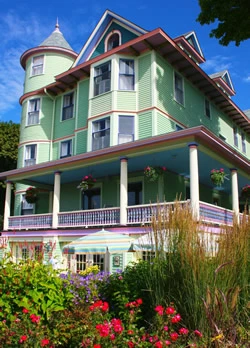
The best part is that all of it happens within walking distance of where you sleep. Stay with us at Inn on Mackinac and you are a short stroll from the downtown forge, the carriage queues on Main Street, and the hill road up toward Surrey Hill, which means you can wander out before breakfast and watch the island’s horses head to work. When you are ready to plan the trip, book your stay with Inn on Mackinac and let the sound of hooves be your morning alarm.
Category: Mackinac Island