Mackinac Island Family History Guide: Cemeteries, Archives & Ancestral Stories
Turn a Family Name Into a Meaningful Island Journey
Family-history travel begins with a question. Perhaps an old photograph mentions Mackinac. A military record lists Fort Mackinac. Another clue may be a church register carries a familiar surname. Visiting the island can give those facts a sense of place. Yet the best results come from careful preparation.
This guide explains how to organize what you know, identify useful records. It also explains how to visit historic places with respect. It also helps travelers avoid a common mistake: treating a matching name as proof. Good genealogy connects people through several records, dates, locations, and relationships.
Mackinac has been a meeting place for Indigenous communities, traders, soldiers, missionaries, workers, and travelers. That long history makes research rewarding. Yet it can also make names and boundaries complicated. A clear plan keeps the search focused.
Start With Facts Your Family Already Holds
Begin at home before searching archives. Talk with older relatives. Ask open questions about names, places, occupations, languages, military service, churches, and migration. Record who shared each detail and when. Family stories are valuable clues. Yet they should be checked against documents.
Gather certificates, funeral cards, letters, diaries, photographs, military papers, family Bibles, and property documents. Look at the back of photographs and inside envelopes. A brief note, studio mark, or mailing address can establish a place and time.
Write names exactly as they appear, including alternate spellings. Mackinac records may include French, British, American, and Anishinaabe connections. Clerks also wrote names as they heard them. A surname can change between church, census, military. It also holds tax records.
ull names, nicknames, maiden names, and spelling variations.
Approximate dates and places for births, marriages, deaths, and moves.
Names of spouses, children, parents, witnesses, neighbors, and business partners.
Church affiliation, military unit, occupation, property, or employer.
Build a Timeline Before Planning the Visit
Place every known event in date order. A simple timeline exposes gaps. It stops two people with the same name from becoming one person by accident. Add a source beside each fact. If a date comes only from family memory, label it as unconfirmed.
Pay close attention to geography. Historical references to Mackinac may describe the island, Mackinac County, the Straits, Fort Michilimackinac on the mainland. It may also describe a wider regional network. County boundaries and government names changed over time. Confirm which place a record actually means before arranging an island visit.
Then turn gaps into research questions. Instead of asking, ‘What can I find about my family?’ ask, ‘Was Marie recorded in Ste. Anne’s parish register before 1821?’ or ‘Did Thomas serve at Fort Mackinac between 1860 and 1870?’ Specific questions point to specific collections.
Use the Records That Match Your Question
Mackinac State Historic Parks explains that the Keith Widder Library at the Petersen Center holds selected resources for people researching ancestors who lived at Mackinac. These include microfilm of Ste. Anne’s Parish register for 1695-1821, Fort Mackinac U.S. Army muster rolls for 1796-1895, and local government. It also holds tax records covering parts of the nineteenth. Some run into the early twentieth century.
The same research page makes an important distinction. The library does not hold vital records such as birth, marriage, divorce, and death certificates. Researchers may need the Mackinac County Clerk, the Archives of Michigan, the Library of Michigan, state vital-record offices, or the National Archives. Contact each repository before traveling because access rules and hours can change.
The Archives of Michigan county guide lists Mackinac County record groups by type and year. Examples include marriage returns, death returns, tax records, court files, and assessment rolls. The Library of Michigan also identifies local histories, newspaper indexes, maps, church materials. It also lists published record compilations. Search catalogs using surnames, spelling variants, town names, military units, churches, and occupations.
Church registers can connect baptisms, marriages, witnesses. They can show family relationships.
Military muster rolls can place a soldier at Fort Mackinac during a defined period.
Tax and assessment rolls can show residence, property. They can show change over time.
Court, land, newspaper, and local-government records can add context to daily life.
Contact Research Centers Before You Travel
Do not assume that every collection is available without an appointment. Write to the repository with a short, focused request. Include the person’s full name, known spellings, approximate dates, location. The exact question you hope to answer. Mention records you have already checked.
Ask whether the material is open, digitized, indexed. It may also be stored off-site. Confirm visitor hours, copying rules, photography policies, fees, and identification requirements. If staff can perform a limited search, ask what information and payment they need. A respectful, organized message is easier to answer.
Prepare a research log before the visit. List each collection you plan to check and leave space for the call number, result, citation. Add the next action. Record unsuccessful searches too. Knowing where a person was not found can prevent repeated work. It may narrow the correct date or place.
Visit Mackinac’s Cemeteries With Care
The Mackinac Island State Park Commission identifies three historic burial grounds along Garrison Road. They are Fort Mackinac Post Cemetery, the Catholic cemetery. The Protestant cemetery. The post cemetery was the earlier burial ground. At the same time, the two community cemeteries were established on military reservation land in the nineteenth century.
A cemetery visit can confirm names and dates. Yet a marker is only one piece of evidence. Stones may be weathered, replaced, moved, or engraved years after a death. Photograph the full marker, close details. The surrounding plot. Record the cemetery name, section, row, date, and nearby family markers.
Treat every burial ground as an active place of remembrance. Stay on established paths where possible. Do not rub fragile stones, move objects, clear vegetation without permission. Do not enter restricted areas. If a marker is difficult to read, use angled natural light or take several photographs rather than touching it.
Check cemetery rules and access information before setting out.
Bring a notebook, pencil, water, and a fully charged camera or phone.
Copy inscriptions exactly, including abbreviations. Mark letters that are unclear.
Compare the marker with church, death, newspaper. It also holds family records.
Let Historic Places Add Context, Not Assumptions
Historic buildings can help you understand how an ancestor may have lived, worked, worshipped, or traveled. The Biddle House presents the home of Agatha and Edward Biddle. It explores Anishinaabe life, business, family networks. They also explain cultural change during the 1830s. Fort Mackinac and other downtown sites interpret military. They also show community history across different periods.
Visit locations connected to the record. Yet separate documented facts from imagination. A person who appeared on a tax roll near Market Street did not necessarily enter every surviving building nearby. Use careful language such as ‘lived in this area,’ ‘served at the fort,’ or ‘was recorded in the parish.’
Take photographs of public views, interpretive signs, street relationships, and landscape features. These images can explain distance and setting in a family history. They are most useful when captions identify the location, date, and confirmed connection.
Research Indigenous and Mixed-Ancestry Families Respectfully
Mackinac’s history includes generations of Anishinaabe people and families connected through trade, marriage, diplomacy, religion, and community life. Records created by churches, governments, military offices, and outside researchers may use outdated terms or incomplete descriptions. Read them in historical context without repeating harmful labels as if they were neutral facts.
A single colonial record may not represent how a person or community understood its own identity. Compare sources. Seek work created with tribal partners. Mackinac State Historic Parks developed the Biddle House museum with tribal collaboration. This makes it a useful place to learn why Indigenous history must be treated as continuing history rather than a vanished chapter.
If research suggests a tribal connection, avoid making a public claim from a surname or family story alone. Genealogical evidence and tribal citizenship are not the same matter. Follow the guidance of the relevant nation. Respect its authority over citizenship and community identity.
Organize Evidence So Others Can Follow It
or every document or photograph, record the creator, title, date, collection, repository, call number, page. Add the date you viewed it. Save files with consistent names instead of labels such as image1. Keep an untouched copy of every scan. Then make a separate working copy for notes or cropping.
Compare evidence before drawing a conclusion. A strong link may combine a parish entry, tax roll, census record, military record, newspaper notice, and cemetery marker. Explain conflicts rather than hiding them. If two records give different birth years, show both. State which one appears more reliable. Explain why.
End each research session with a short summary. List what you learned, what remains uncertain. Note the next step. This turns a collection of images into a useful family-history project.
Make the Research Trip Part of the Family Story
Leave time to experience Mackinac Island beyond the research checklist. Walk the streets your records mention, look across the harbor. Talk about how travel. They can add details about daily life differed in earlier generations. Place gives family history an emotional dimension that a database cannot provide.
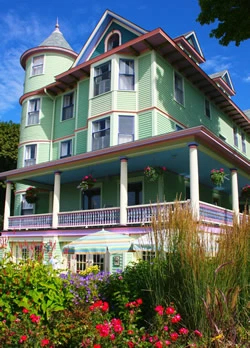
Inn on Mackinac offers a historic and comfortable base near the island’s downtown area. After a day of archives, museums, and thoughtful exploration, guests can organize notes. They can share discoveries at a slower pace. Plan ahead, verify each connection. Let the island help you tell a careful story that future generations can trust.
Category: Mackinac Island