Mackinac Island Scout Service Camp: The Governor’s Honor Guard
If you have spent a summer morning near Fort Mackinac, you have probably seen them without knowing what you were looking at. A small group of teenagers in crisp uniforms crosses the parade ground just after breakfast, raises a flag with practiced care, and then fans out across the island to answer questions from visitors who assume they work for the park. They are not park staff. They are Scouts, and they are part of a summer service tradition on Mackinac Island that has run almost every year since 1929. Once you know the story behind those uniforms, the island’s daily rhythm makes far more sense, and the flags you pass all week stop being background scenery.
How the program began in 1929
The idea came from Roger Andrews, a Mackinac Island State Park commissioner who wanted young people to help care for the park rather than simply visit it. In 1929 he invited a small group of Eagle Scouts to spend a week on the island as what he called the Governor’s Honor Guard. Their duties were simple but hard work: raise and lower the flags, help guide tourists around Fort Mackinac, and take part in the firing of the sunset gun. It worked so well that it was repeated the next summer, then the summer after that, until it became one of the longest-running youth service programs in the country. Nearly a hundred years later, the shape of the week has barely changed.
A future president in the first group
Among those first eight Eagle Scouts was a young man from Grand Rapids named Gerald R. Ford, who would go on to become the thirty-eighth President of the United States. Ford spoke warmly about that summer for the rest of his life, calling it a week that shaped him, and he came back to the island in later years. That link gives the program a real place in American history and not just local lore. If you enjoy this sort of detail, our record of which U.S. presidents have visited Mackinac Island is worth a read, because Ford is far from the only one with an island story. It is a fine thing to think about while standing on the same parade ground where a teenage Ford once raised a flag.
The barracks the CCC built
For the first few years the Scouts slept in the fort’s old commissary building, which worked but was never meant for it. In 1934 a proper Scout Barracks went up beside the parade ground, built by the Mackinac Island unit of the Civilian Conservation Corps. Many of the men in that crew were veterans of the First World War, which gives the building a layered history that most visitors walk right past. The barracks still houses each week’s group today, and a marker beside it tells the story for anyone who stops to read. It is one of the quieter landmarks on the island and well worth two minutes of your time.
What the Honor Guard actually does each day
The week is a working week, not a summer camp in the usual sense. Scouts rise early, eat together, and are on duty before most visitors have finished their first cup of coffee. Jobs rotate so that everyone takes a turn at each one, from flag detail to visitor questions to hands-on work around the park. Adult leaders keep watch, but the Scouts carry the schedule themselves, and they are held to a standard of dress and conduct that would satisfy any drill instructor. By Friday most of them are tired in the good way that comes from having been truly useful.
Raising and lowering the flags
The most visible duty is the flag detail, and it is a bigger job than it sounds. The Honor Guard is responsible for raising and lowering flags at more than twenty locations across the island each day, including Fort Mackinac, the downtown visitor center, the fort cemetery, and a scattering of historic buildings under state park care. Teams set out in pairs at first light, work their way through the assigned list, and repeat the route in reverse each evening. Michigan weather being what it is, this happens in sunshine, fog, and driving rain alike, and the flags come down properly folded in all of it. If you are out early, you will see them crossing the island on foot while the streets are still quiet.
Helping visitors find their way
Between flag details, Scouts act as a roving help desk across the park. They point people toward Arch Rock, explain where the next carriage tour leaves from, and answer the same questions dozens of times a day with real patience. Many of them study the island’s history before they arrive and can give a surprisingly good account of what happened at the fort and why it mattered. Visitors often assume they are talking to a young park employee, which is a fair mistake and a compliment to how the Scouts carry themselves. If you want the fuller story of the site they are describing, our guide to things to do at Fort Mackinac covers the buildings and demonstrations in detail.
Service projects around the park
The third part of the week is plain hard work, and it is the part the Scouts tend to remember most fondly. Contingents clear brush along interior trails, help with painting and light maintenance on historic structures, tidy the grounds around the fort, and pitch in wherever the park staff needs extra hands. Mackinac Island State Park covers a large share of the island, and much of it is maintained by a small crew, so a week of steady volunteer labor makes a real difference. The projects change from year to year depending on what needs doing. Many alumni say the trail work stayed with them longer than the ceremonies did.
Where visitors can watch the Honor Guard
You do not need a ticket or a reservation to see the Scouts at work, only reasonable timing and a little patience. The flag ceremonies happen in the open, the Scouts are used to being watched, and most visitors find the whole thing quietly moving. A few polite ground rules apply: give the detail room to work, keep conversation down during the ceremony itself, and save your questions for afterward when they will be happily answered.
Fort Mackinac and the parade ground
The parade ground in front of the Scout Barracks is the best single vantage point on the island. Morning and evening ceremonies both take place here, and the setting, with the fort walls on one side and the Straits spread out below, is hard to beat. Arrive a few minutes early, stand back from the flagpole, and you will see the full sequence done properly. The barracks and its historical marker are right there, so you can read the background while you wait. Fort admission applies during operating hours, so check the day’s schedule before you plan around it.
Downtown, Marquette Park, and beyond
Not every flag on the Honor Guard’s list sits inside the fort. Scouts work their way through downtown, past Marquette Park, and out to several smaller historic sites, which means you may well cross paths with them while walking Main Street or heading up the hill. Early risers have the best odds, since the first details begin well before the day’s ferries arrive. It is one of the pleasures of staying overnight on the island rather than visiting for the day. For more of the island’s soldiering past beyond the fort walls, our piece on the military history of Mackinac Island fills in the broader picture.
How Scouts earn a place in the program
Spots in the Honor Guard are hard to get and are arranged through Scouting councils rather than booked directly. In Michigan the program runs through the Michigan Crossroads Council, and Girl Scouts take part through their own councils as well. Scouts apply to join a troop for a set week of the summer, attend practice meetings beforehand, and need a Scoutmaster’s approval and a completed physical on file. There is a fee covering the week on the island, plus the usual costs for uniforms, travel, and spending money, and the exact figure varies by troop. Weeks fill early, so families usually start the process the winter before.
Girl Scouts joined in 1975
For its first four and a half decades the program was open only to Boy Scouts. That changed in 1975 at the urging of Michigan First Lady Helen Milliken, who pushed for Girl Scouts to serve alongside them, and girls have been part of the Honor Guard ever since. Today troops draw from both groups, and mixed troops serve all season long. It is a small piece of Michigan history that rarely comes up on the standard island tour. Ask a Scout about it and you will usually get a lively answer.
Why a small tradition still matters
Nearly a century on, the Mackinac Island Scout Service Camp has quietly done something rare. It has given thousands of young people a week of real duty in a place that rewards care, and it has given the island steady help that no budget line could easily replace. Programs like this one usually fade away, lost to staffing changes or new rules or plain neglect, and this one has not. There is something worth noticing in a tradition that lasts because both sides keep getting something real out of it. The next time you see a flag come down at sunset, you will know exactly who is folding it and why.
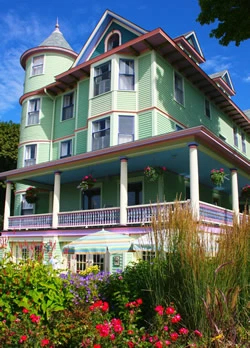
If you are planning a trip built around the island’s history, we would be glad to have you stay with us at Inn on Mackinac, just a short walk from the fort hill and the downtown flag sites where the Honor Guard begins its morning rounds. Book your stay with Inn on Mackinac and wake up early enough to catch the flags going up.
Category: Mackinac Island