Mackinac Island vs. Apostle Islands: Which to Visit
Two of the best island trips in the Midwest offer contrasting Great Lakes experiences. Mackinac Island floats in the Straits of Mackinac, where Lake Huron and Lake Michigan meet, and it has been welcoming summer visitors since the 1880s. The Apostle Islands rise out of Lake Superior off the top of Wisconsin, and most of them have no roads, no shops, and no one living on them at all. People often lump the two together because both involve a boat ride and a lot of beautiful water, but they ask completely different things of a traveler. Here is how to tell which one belongs on your calendar.
Two Very Different Kinds of Island Trip
The simplest way to understand the difference is to ask what you want waiting for you when the boat drops you off. On Mackinac Island, the answer is a village. You step onto a dock in the middle of a busy downtown, with hotels, restaurants, bike rentals, and fudge shops all within a few hundred feet of the water. The Apostle Islands work the other way around. Apostle Islands National Lakeshore protects twenty-one of the archipelago’s twenty-two islands, plus a twelve-mile strip of mainland shoreline in Ashland and Bayfield counties. Almost none of those islands has anything built on it beyond a dock, a privy, and a trail. One trip hands you comfort on arrival, and the other hands you a map.
Getting There and Getting Around
Both destinations sit a long way from a major airport, and both ask you to trade your car for a boat at some point. The two travel days feel nothing alike, though, and this is where many people make their decision. Mackinac ferries follow published seasonal schedules, making the crossing relatively straightforward to plan. The Apostles depend much more on the weather, on your own paddling or sailing plans, and on which island you have in mind. The two are also roughly four hundred miles apart by road, so combining them in one week is ambitious rather than relaxing.
Reaching Mackinac Island
Ferries serve Mackinac Island from Mackinaw City on the Lower Peninsula and St. Ignace on the Upper Peninsula. Crossing times and departure frequency vary by route, season, weather, and sailing, so check the current schedule before traveling. Our guide to choosing between the Mackinaw City and St. Ignace docks walks through parking, drive times, and which side suits your route. Once you land, there are no cars to deal with, because the island moves by horse, bicycle, and foot. Most visitors walk to their hotel, rent a bike within the hour, and never think about transportation again.
Reaching the Apostle Islands
Getting out to the Apostles starts in Bayfield, Wisconsin, a small harbor town at the northern tip of the Bayfield Peninsula. The national lakeshore headquarters sits right in town at 415 Washington Avenue, and the rangers there are the best source for current conditions. From the harbor you can book a sightseeing cruise, hire a water taxi, charter a sailboat, or launch your own kayak. There is no scheduled public ferry hopping from island to island the way the Mackinac boats run, so each island visit is something you arrange on purpose. Lake Superior is cold and moody, and trips get cancelled when the wind comes up, which is simply part of the deal.
Where You Sleep at Night
Lodging is the clearest dividing line between these two trips, because one destination is built around beds and the other is built around tents. Think honestly about which version of an evening sounds better to you, since there is very little middle ground once you are out on the water. A rainy night feels charming in a Victorian guest room and considerably less charming in a nylon tent on a beach with no way to leave until morning.
Hotels and Inns on Mackinac Island
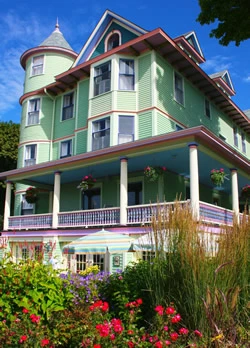
Mackinac Island has been in the hospitality business for well over a century, and it shows. You can choose among historic hotels, small bed-and-breakfasts, family-run inns, and rental cottages, nearly all of them within walking distance of the ferry docks and Main Street. Amenities, meal plans, luggage service, and transportation assistance vary by property, so compare each lodging option carefully. Rates and availability also change by date, with summer weekends and major events often creating the strongest demand. Booking several months ahead is normal practice, especially for a weekend or during the Lilac Festival.
Camping and Cabins in the Apostles
In the Apostles, camping is the main way to spend a night on the water. The National Park Service allows camping on eighteen of the twenty-one islands, plus three sites on the mainland unit, and every stay needs a permit arranged in advance. Individual campsites and primitive camping zones run fifteen dollars per night, group sites are thirty dollars, and each trip carries a ten-dollar reservation fee. You carry in your own food, water filter, and stove, and you carry everything out again. Hotels and inns do exist, but they are back on the mainland in Bayfield or across the channel on Madeline Island, not out in the park itself.
What There Is to Do
Both islands reward slow days, yet they reward completely different habits. Mackinac fills your hours with places to walk into, while the Apostles fill them with water, rock, and distance. The real question is whether you would rather read an interpretive sign inside a stone fort or paddle a kayak into a cave.
History, Forts, and Main Street
Mackinac Island packs an unusual amount of American history into its compact landscape, and more than eighty percent of the island is protected within Mackinac Island State Park. Fort Mackinac looks down on the harbor from the bluff, with costumed interpreters, cannon firings, and a tea room with one of the best views in Michigan. For the 2026 season, general admission is $17.50 for adults and $10.50 for children ages five through twelve; children four and under enter free. Beyond the fort you have eight miles of shoreline highway with no cars on it, the Grand Hotel porch, Arch Rock, and a downtown you can cover in an afternoon.
Sea Caves, Kayaks, and Lighthouses
The Apostles are famous for sandstone sea caves carved by Lake Superior waves, and the best known of them line the mainland shore near Meyers Beach off Highway 13. From the launch it is about a mile and a half of paddling to the first caves, which then continue another three miles down the coast. Devils Island and Sand Island have their own cave formations, best seen from a boat on a calm day. The park preserves the largest collection of lighthouses in the National Park System, spread among several island light stations. Tour access varies by site, season, weather, and operator, so confirm the current schedule before planning a landing. If you enjoy the way water shapes stone, the story of how Mackinac’s own limestone was formed makes a nice companion read.
What Each Trip Costs
The Apostles are cheaper on paper and more expensive in gear. There is no entrance fee for the national lakeshore at all, and your overnight costs can stay under twenty dollars a night if you camp. Parking at Meyers Beach costs five dollars, and boat cruises, water taxis, and lighthouse tours are the main add-ons. If you do not already own a tent, a stove, a dry bag, and a sea kayak, though, the real price of a self-guided island trip climbs quickly, and guided paddling trips are not cheap either.
Mackinac costs more in obvious, predictable ways. A round-trip ferry ticket with Shepler’s runs thirty-nine dollars for adults and twenty-seven dollars for children for the 2026 season, with a small online booking fee on top. Lodging is the biggest line item by far, followed by meals out, bike rentals, and attraction tickets. The upside is that almost nothing requires equipment you have to buy, and our complete breakdown of 2026 ferry prices covers the smaller fees most people forget to budget for.
Choosing the Right Island for Your Group
Who you are traveling with usually settles this question faster than any list of attractions. Families with young children, couples on a short getaway, grandparents, and anyone who wants a real bed at the end of the day will have a far easier time on Mackinac Island. Everything is close together, help is nearby, and a bad-weather afternoon just means a museum and a long lunch instead of a ruined plan. Confident paddlers, backpackers, and travelers who genuinely enjoy planning their own logistics will get more out of the Apostles, where the payoff is solitude you cannot buy anywhere else.
There is also a middle path worth knowing about. Madeline Island, the largest of the Apostles, is not part of the national lakeshore and is the only island in the chain open to private ownership and commercial development. The town of La Pointe there has a few hundred year-round residents, restaurants, lodging, and a state park, and a car ferry runs over from Bayfield. It gives you an Apostle Islands setting with mainland comforts, in much the way that readers comparing Mackinac Island and Isle Royale often end up weighing wilderness against convenience.
Conclusion
If you want wilderness, cold clear water, and a trip you build yourself, point your car toward Bayfield and the Apostle Islands. If you want history underfoot, a car-free village, horses on Main Street, and someone else handling the details, Mackinac Island is the better answer almost every time. When you choose Mackinac, stay with us at Inn on Mackinac, where you are a short walk from the ferry docks, the shops, and the quiet end of the shoreline road. Explore rooms and availability at Inn on Mackinac whenever your dates are ready.
Category: Mackinac Island