Mackinac Island vs. Traverse City: Two Iconic Michigan Destinations Compared
Introduction
If you are planning a Northern Michigan vacation, two names come up again and again: Mackinac Island and Traverse City. Both are bucket-list destinations, both sit along the Great Lakes, and both deliver postcard-worthy scenery. Yet they offer almost completely different experiences. One is a car-free Victorian island frozen pleasantly in time; the other is a lively mainland city surrounded by vineyards, beaches, and dunes.
So which one is right for your trip? This side-by-side comparison breaks down how Mackinac Island and Traverse City stack up on the things that matter most, from how you get there to what you will actually do once you arrive.
The Big-Picture Difference
At the simplest level, the choice comes down to atmosphere. Mackinac Island is small, historic, and slow-paced, with no cars allowed and a downtown that looks much as it did more than a century ago. Traverse City is a growing lakeside city of roughly 16,000 residents that serves as the gateway to Michigan’s wine country and some of the most celebrated freshwater beaches in the country.
If your ideal getaway is quiet, romantic, and nostalgic, Mackinac Island leans in that direction. If you want variety, nightlife, wineries, and easy day trips by car, Traverse City has the edge. Neither is better in a vacuum. They simply suit different travelers and different moods.
Getting There and Getting Around
This is where the two destinations differ most dramatically.
Mackinac Island has no bridge and no airport for commercial traffic, so every visitor arrives by ferry. You drive to either Mackinaw City or St. Ignace, park your vehicle on the mainland, and board a passenger ferry for a crossing that typically takes about 15 to 30 minutes across the Straits of Mackinac. Once on the island, you leave the modern world behind: motor vehicles have been banned since the late 1800s. You get around entirely on foot, by bicycle, or by horse-drawn carriage. That car-free character is central to the island’s charm, but it also means you need to pack light and plan for a slower pace.
Traverse City, by contrast, is built for drivers. It has its own commercial airport, Cherry Capital Airport, and sits at the meeting point of several highways, making it easy to reach from Detroit, Chicago, or Grand Rapids. Having a car is not just convenient here, it is close to essential, because the region’s best wineries, beaches, and the towering Sleeping Bear Dunes are spread out across the surrounding peninsulas and countryside.
The takeaway: Mackinac Island rewards travelers who want to unplug and slow down, while Traverse City suits those who like the freedom to roam by car.
Where to Stay
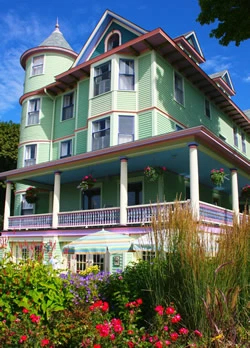
Mackinac Island lodging skews historic and boutique. The island is home to grand landmarks like the Grand Hotel, which opened in 1887 and is famous for one of the longest porches in the world, as well as a collection of charming inns, bed-and-breakfasts, and smaller hotels within walking distance of the harbor. Because space is limited and everything must be ferried in, rooms can book up quickly in peak season and prices reflect the island’s exclusivity. Staying overnight, however, lets you experience the island after the day-trippers leave, when the streets grow quiet and the lamplight comes on.
Traverse City offers a much wider range of accommodations, from waterfront resorts and chain hotels to vacation rentals, wine-country cottages, and budget motels. That variety generally makes it easier to find something in your price range, and the larger inventory means more flexibility for last-minute planning.
Things to Do
Here the two destinations play to very different strengths.
On Mackinac Island, the appeal is in its timeless simplicity. You can bike the roughly eight-mile road that circles the island’s shoreline, tour the ramparts of historic Fort Mackinac, admire natural landmarks like Arch Rock, wander the Victorian streets, and of course sample the island’s legendary fudge, which has been made here since the late 1800s. The pace is unhurried, and much of the pleasure comes from the scenery and the sense of stepping into another era. Film buffs will also recognize the island as the setting for the 1980 romance Somewhere in Time.
Traverse City is a destination for people who want to stay busy. The surrounding Old Mission and Leelanau peninsulas are dotted with more than 50 wineries, and the broader region offers dozens of wineries, breweries, cideries, and tasting rooms to explore. Nearby, Sleeping Bear Dunes National Lakeshore offers dramatic bluffs and miles of Lake Michigan beaches. In town you will find a walkable downtown, a lively restaurant and bar scene, boutique shopping, and easy access to kayaking, boating, and golf. The annual National Cherry Festival, held in early July, celebrates the region’s identity as the self-proclaimed Cherry Capital of the World and draws big crowds.
If you crave outdoor variety, wine tasting, and a bit of nightlife, Traverse City wins on sheer breadth of activities. If you prefer a focused, walkable destination steeped in history, Mackinac Island delivers a more curated experience.
Food and Drink
Traverse City is arguably one of the best food-and-drink destinations in the Midwest. Its wine country is the headline attraction, with tasting rooms scattered across scenic peninsulas, but the city also has a strong farm-to-table restaurant scene, craft breweries, and cider houses. Cherries appear everywhere, from dishes to desserts to local products, and summer festivals put the region’s culinary culture on full display.
Mackinac Island has a more compact but memorable food scene. Fudge is the undisputed star, sold in more than a dozen shops downtown, and many visitors happily leave with a box or two. Beyond the sweets, you will find classic resort dining, whitefish and other Great Lakes fare, and elegant options at the historic hotels. It is less about variety and more about atmosphere and tradition.
Cost and Value
Neither destination is a strict budget trip, but the cost profiles differ. On Mackinac Island, the ferry fare, limited lodging supply, and the logistics of ferrying goods to the island can push prices up, especially in peak summer. That said, many of the island’s best pleasures, such as biking the shoreline, walking the historic streets, and enjoying the views, are inexpensive or free.
Traverse City offers more price flexibility thanks to its larger range of hotels, rentals, and restaurants. You can splurge on wine tours and fine dining or keep costs modest with beaches, public parks, and casual eateries. For travelers watching their budget, the wider selection generally makes Traverse City easier to tailor to a specific spending level.
When to Visit
Timing can influence which destination suits you best. Traverse City shines in summer, when the wineries are in full swing, the beaches are warm enough for swimming, and the National Cherry Festival lights up early July. That popularity comes with crowds and higher prices in peak weeks, so late summer and early fall can be a sweet spot, with harvest season adding energy to the wine country and slightly thinner crowds. Winter brings a quieter, cozier scene with nearby skiing and snow sports.
Mackinac Island is highly seasonal. The ferries, hotels, and most shops operate from roughly spring through fall, with summer being the busiest and liveliest stretch and the famous Lilac Festival arriving in June. Many travelers love the shoulder months of late spring and early autumn, when the weather is still pleasant, the fall colors begin to show, and the island feels calmer. In deep winter the island largely shuts down for tourism, so plan a warm-season trip if Mackinac is your goal.
Which One Is Right for You?
Choose Mackinac Island if you want:
- A romantic, nostalgic, car-free escape
- History, Victorian charm, and a slower pace
- A compact, walkable destination you can experience without driving
- Iconic landmarks like the Grand Hotel, Fort Mackinac, and Arch Rock
Choose Traverse City if you want:
- Wine country, breweries, and a strong food scene
- Freshwater beaches and access to Sleeping Bear Dunes
- A lively downtown with shopping and nightlife
- The flexibility of exploring by car with a wide range of lodging
Why Not Both?
Here is the good news: Mackinac Island and Traverse City are close enough that many travelers combine them into a single Northern Michigan road trip. Traverse City works beautifully as a first stop for wine, beaches, and dining, after which you can drive north toward the Straits of Mackinac, park, and ferry over to the island for a few days of quiet, history, and fudge. Pairing the two gives you the best of both worlds: the energy and variety of the mainland and the timeless calm of the island.
If you do build a combined itinerary, consider ending your trip on Mackinac Island. After the busier, activity-packed days around Traverse City, the island’s slower rhythm makes a perfect, restful finale, the kind of place where you can sit on a porch, watch the ferries come and go, and let the vacation truly sink in.
Conclusion
Mackinac Island and Traverse City both earn their spots on Michigan travel bucket lists, but they scratch different itches. Mackinac Island is the destination for romance, history, and unplugged simplicity. Traverse City is the destination for wine, beaches, food, and freedom of movement. Match the destination to the trip you actually want, or better yet, experience both, and you will understand why travelers keep returning to this corner of the Great Lakes year after year.
If Mackinac Island feels like the right fit for your Northern Michigan trip, make your stay even more memorable with Inn on Mackinac. Enjoy a relaxing island stay close to Mackinac’s historic streets, waterfront views, shops, and timeless attractions.
Category: Mackinac Island