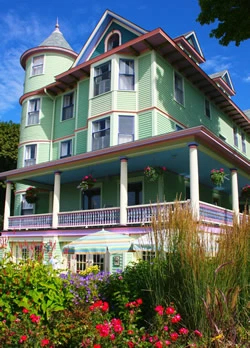
Stuart House City Museum on Mackinac Island Exhibits History and Visitor Tips
The Stuart House City Museum tells several Mackinac Island stories inside one historic building. Visitors can learn about the American Fur Company, commercial fishing, island residents, Native culture, military service, and the island’s later tourism era. The museum is also easy to add to a downtown walking route.
This guide explains the building’s history, notable exhibits, location, and practical planning details. Hours and displays can change by season, so confirm current information before visiting.
Why the Stuart House Matters
The building was constructed in 1817 as the Agent’s House for the American Fur Company. It belonged to a larger company complex on Market Street. Robert Stuart arrived that year as an assistant and later served as the company’s resident agent for fourteen years.
During the fur trade boom, the house functioned as both a residence and an important social center. The Mackinac operation connected Great Lakes transportation, trade, and business networks. The building gives visitors a physical link to that period.
From Company House to City Museum
The property’s role changed as the fur trade declined and Mackinac Island developed as a resort. The house became a boardinghouse. In 1871, the principal American Fur Company buildings were joined as the John Jacob Astor House hotel.
The City of Mackinac Island purchased the complex in 1900. Hotel operations continued until 1929. The structures were later separated, and the Robert Stuart House became the city museum. That long sequence helps visitors understand why the building covers more than one historic era.
What to See Inside
The Fur Trade and Commercial Fishing
A central exhibit examines the American Fur Company and the work conducted from Mackinac Island. Displays also connect the decline of the fur trade with the growth of commercial fishing. Boats and skills used in one industry could support the next chapter of the island economy.
Models of Island Buildings
Miniature models recreate recognizable Mackinac Island buildings and landmarks. They help visitors compare the island’s built environment across time. Look closely at construction details and use the models to identify places to see later during your walk.
Community Life and Personal Stories
Photographs, household objects, and local stories show that island history is not limited to military leaders and business owners. Exhibits about families and year-round residents make the museum feel personal. One memorable story concerns Cubbie, a bear once associated with island life and photographed with actress Esther Williams.
Native Culture Military History and Fudge
The museum also includes material related to Native culture, military service, and Mackinac Island fudge. These subjects extend the timeline beyond the fur company. Read labels carefully and allow separate communities and eras to remain distinct rather than treating them as one story.
How Long to Allow
A quick visit may take about thirty minutes, but history-focused travelers should allow longer. Two floors of exhibits reward slow reading. Families can choose one theme on each level rather than expecting children to study every label.
Because the museum is compact, it works well between larger activities. It can also provide a calmer indoor stop during a busy downtown day. Do not rely on it as a weather shelter without first confirming that it is open.
Location and Walking Route
The Stuart House stands at 7342 Market Street near city offices and other historic downtown locations. Market Street runs parallel to Main Street and usually feels quieter. The setting makes the museum a natural stop during a self-guided history walk.
Pair the museum with this downtown Mackinac Island walking tour to organize nearby landmarks.
Visitors can combine the Stuart House with the American Fur Company Store and Dr. Beaumont Museum, the Biddle House, the art museum, Marquette Park, or Fort Mackinac when those sites are open. Each attraction has separate ownership, admission, and seasonal hours.
Admission Hours and Seasonal Access
The museum has traditionally welcomed visitors during the main season with admission by donation. Published hours have varied across years. Treat older directories and brochures as background only. Check the City of Mackinac Island, the Tourism Bureau, or the museum directly for current dates and hours.
The museum normally closes for the winter. A locked building or changed schedule does not mean the attraction has permanently closed. Seasonal closure is common across the island.
Accessibility and Building Conditions
The Stuart House is a historic two-story structure. Visitors who use mobility devices or have difficulty with stairs should ask about current access to each level before arriving. Confirm the entrance route, interior elevator status if applicable, seating, and restroom options.
Historic rooms may have narrower passages and uneven transitions. Keep bags compact and supervise children around displays. Staff or volunteers can explain which areas are available on the day of your visit.
Tips for Families
Give children a simple search goal. Ask them to find a miniature building, an old photograph, an object connected with fishing, and one surprising local story. This creates focus without turning the visit into a lesson plan.
Older children can compare the museum with Fort Mackinac or another historic site. Ask which location explains business, military life, or family life most clearly. Short discussions help separate the purposes of each museum.
Tips for History Focused Visitors
Start with the building itself. Notice its Federal-style proportions, clapboard exterior, and relationship to the former company complex. Then follow the sequence from the Agent’s House to boardinghouse, hotel, city property, and museum.
Avoid rushing directly to the most unusual objects. The strongest story comes from seeing how trade, transportation, fishing, tourism, and community life connect. Photograph only where permitted, and record exhibit titles if you want to research a subject later.
Combine the Museum With a Full Day
Morning History Route
Begin downtown before streets become busiest. Visit the Stuart House, continue to nearby Market Street sites, then walk toward Marquette Park. Add Fort Mackinac if its schedule and admission fit your day.
Afternoon Flexible Route
Use the museum after lunch, then continue with shopping, the harbor, or a relaxed walk. Its central location makes it easy to adjust plans without crossing the entire island.
Travelers interested in more local context can review Mackinac Island history and visitor guides before arriving.
Common Planning Mistakes
Do not confuse the Stuart House with Stuart House Hotel or with the state historic park museums. Do not assume one ticket covers every downtown historic site. Avoid relying on search-result hours that may be from an earlier season.
Another mistake is scheduling too many museums without breaks. Mix indoor history with a harbor walk, meal, or park stop. This keeps the day enjoyable and gives visitors time to absorb what they learned.
Questions to Ask Before Visiting
Ask whether both floors are open, whether the elevator or another accessible route is operating, and whether groups need advance notice. Confirm the current admission arrangement and accepted payment methods for donations. If you are visiting near the beginning or end of the season, verify the final open date.
Teachers and group leaders should also ask about available educational materials, photography rules, and the best arrival time. A short call can prevent conflicts with maintenance, special programs, or large tour groups.
How the Museum Differs From Nearby Sites
The Stuart House is city owned, while several nearby historic attractions are operated by Mackinac State Historic Parks. This difference matters because schedules, admission policies, and exhibits are managed separately. The Stuart House emphasizes community collections and the many uses of one important building.
Fort Mackinac focuses more heavily on military and strategic history. The Biddle House presents Native history through the Mackinac Island Native American Museum. The American Fur Company Store and Dr. Beaumont Museum explains a specific medical event and commercial setting. Visiting more than one site provides a broader view without making the museums interchangeable.
Use Exhibit Labels as a Research Starting Point
Visitors who want deeper history should note names, dates, and organizations from exhibit labels. Later, compare them with City of Mackinac Island history pages, Mackinac State Historic Parks resources, and library collections. This approach is especially useful when a display introduces a person or business that cannot be explained fully in limited gallery space.
Historical interpretation can change as new research appears. Use current institutional sources and distinguish documented facts from family stories or popular legends. If an object raises a question, ask museum staff rather than guessing from appearance alone.
Photography and Museum Courtesy
Check the current photography policy before taking pictures. Avoid flash when asked, keep equipment out of walkways, and never move an artifact for a better angle. Photographing an exhibit label can help with later research when permission is given.
Speak quietly, supervise children, and allow other visitors room to read. Donations help support museum operations, so contribute when possible and follow any instructions at the entrance.
Where to Stay for a Downtown Museum Visit
A walkable lodging location makes it easier to visit Market Street early and return for a break. Compare room layout, accessibility, luggage handling, and distance from the ferry dock before booking.
See Inn on Mackinac rooms and review the property’s location and amenities when planning a history-focused stay.
Conclusion
The Stuart House City Museum adds depth to a Mackinac Island visit. Its 1817 building and varied collections connect the fur trade with fishing, tourism, and community life. Confirm seasonal access, allow time for both floors, and combine the museum with nearby Market Street landmarks.
For a convenient base near downtown history, check Inn on Mackinac availability and plan time to explore the island at a comfortable pace.
Category: Mackinac Island