The Architecture of Mackinac Island: Victorian, Colonial & Why It Was Preserved
Mackinac Island feels like a place held outside modern time. Horses move daily along narrow streets beside bright harbor buildings.
Much of that charm comes from the island’s old buildings. They share more than two centuries of recorded island history.
This guide explains the main styles found across Mackinac Island. It also shows why those buildings still survive there today.
Why Mackinac Island Looks Frozen in Time
Many old American towns changed when roads and buildings grew. Mackinac Island chose a slower path shaped by strong protection.
A Whole Island Protected
Federal protection began when Mackinac National Park opened in 1875. It became America’s second national park, three years after Yellowstone.
In 1895, Michigan received the land and kept it protected. It then became Michigan’s first state park under new leadership.
On October 9, 1960, the island gained national landmark status. That status marks the island’s broad importance in American history.
The No-Car Rule Helped
The village banned cars from Mackinac Island streets in 1898. The State Park Commission extended the ban throughout park land in 1901.
Without cars, wide roads and large parking lots stayed unnecessary. Older routes kept their narrow scale and quieter daily feel.
Horses, bicycles, and walking still guide movement across the island. This travel pattern helps protect the island’s historic character today.
The Colonial Roots at Fort Mackinac
The island’s oldest buildings stand inside historic Fort Mackinac today. British forces began moving the fort onto the island during 1780.
The fort guarded key waters linking several major Great Lakes. American troops took control of the military post in 1796.
Michigan’s Oldest Building
Inside the fort stands the famous Officers’ Stone Quarters building. British soldiers began building the stone quarters there in 1780.
American troops finished it after taking control there in 1796. It remains the oldest surviving building anywhere in Michigan today.
Today, it holds museum displays and Fort Mackinac’s Tea Room. Guests can eat inside an important piece of state history.
Stone Walls Built to Last
Fort Mackinac used thick limestone walls for strength and defense. Builders used limestone linked closely to the island’s natural geology.
The first design focused on strength, safety, and military needs. Fancy details mattered less than defense and useful daily space.
The fort stands high above downtown on a limestone bluff. That position gave soldiers wide views across the busy straits.
White walls, blockhouses, and cannons still shape the fort today. Walking through its gates reveals the island’s early military life.
The Victorian Boom of the Gilded Age
Mackinac Island changed greatly during the late nineteenth century. Summer guests came for cool air and broad lake views.
New hotels and cottages served wealthy families from busy cities. Their homes introduced rich details linked with Victorian design tastes.
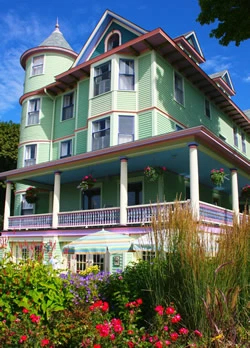
Wide porches, varied roofs, and carved wood became common features. These details now shape the island’s most familiar visual character.
The Grand Hotel
Grand Hotel welcomed its first guests on July 10, 1887. Railroad and steamship companies helped build the grand summer resort.
Its style blends Queen Anne and Colonial Revival design details. The vast wooden hotel rises high along the island’s bluff.
Its famous front porch stretches about 660 feet in length. Grand Hotel calls it the world’s longest front porch today.
Five United States presidents and many performers have stayed there. The hotel remains one of Mackinac Island’s best-known landmarks today.
The Bluff Cottages
Wealthy summer residents also built large homes near the bluffs. Many still line the East and West Bluff roads today.
These cottages mix Queen Anne, Shingle, and Gothic Revival details. Some later homes also display strong Colonial Revival design features.
Look for broad porches, towers, patterned shingles, and varied roofs. These homes reward visitors who explore at a slower pace.
Colors, Porches, and Fancy Details
Victorian builders often used trim to make walls more lively. Carved wooden details are often described as gingerbread trim today.
Porches helped families enjoy cool breezes during warm summer days. Many island homes still have broad or wraparound porch designs.
Paint colors often mark trim, windows, doors, and roof details. Soft yellow, green, blue, and white shades appear widely here.
Not every old cottage follows one clear building style. Many builders mixed popular details across several changing decades.
Churches and Everyday Buildings
Island churches and shops add depth to its building story. They show how residents worshipped, worked, and welcomed summer guests.
Ste. Anne Church has served the island across several centuries. The present church building was completed on the island in 1874.
Trinity Episcopal Church was completed near Fort Mackinac in 1882. Its pointed windows and steep roof show Gothic Revival influence.
Little Stone Church was built with local fieldstone in 1904. Its plain form adds another texture to the island’s streets.
Downtown shops still fill many old nineteenth-century commercial buildings. Their porches, cornices, and fronts keep a traditional street look.
The area feels real because many buildings are true originals. Careful repairs let them serve modern businesses without losing character.
How to Tell the Styles Apart
Visitors need no formal training to enjoy Mackinac Island’s buildings. A few simple details help separate the island’s main styles.
Spotting Colonial and Military Style
Military buildings usually look practical, balanced, and strongly built. They often use limestone, plain wood, and simple boxy shapes.
Roofs may look steep, while fancy trim remains quite limited. These features reflect defense needs instead of changing fashion trends.
Fort buildings come from both British and American military periods. They should not all be called purely Colonial in style.
Spotting Victorian Style
Victorian buildings often look more detailed, layered, and visually complex. Look for towers, patterned shingles, carved trim, and broad porches.
Some homes use bold contrasts, while others use softer shades. Complex roofs often create the style’s lively and varied look.
Victorian describes an era that included several different building styles. Queen Anne, Shingle, and Gothic details may appear together.
How the Island Keeps Its Look Today
Protecting Mackinac Island needs laws, planning, care, and public support. Mackinac State Historic Parks manages key state-owned historic sites today.
The City’s Historic District Commission reviews work within local districts. Some exterior changes, additions, new construction, and demolition need approval.
New work does not always copy old buildings exactly. However, plans should fit nearby scale, materials, and historic character.
The entire island forms a National Historic Landmark district today. Its landmark status also places it on the National Register.
The car ban still supports narrow roads and older travel methods. Horse drays and bicycles remain part of daily island life.
Local limestone shaped early walls, foundations, and military buildings. Wood framing later supported large hotels and summer homes.
Together, these efforts protect the island’s special historic character today. They allow careful change without losing key historic features.
Plan Your Own Architecture Walk
Mackinac Island offers a pleasant walk through several building periods. Begin at Fort Mackinac for the island’s early military story.
Continue toward the bluffs to view grand seasonal cottages nearby. Finish downtown among churches, inns, shops, and old storefronts.
Walk slowly and look above doors, windows, roofs, and porches. Small details often reveal each building’s age and past use.
Inn on Mackinac continues this building story for overnight guests. The Victorian inn was originally built on the island in 1867.
It stands near the harbor and the island’s historic downtown. Its spacious porch offers quiet rest after a full architecture walk.
Visit innonmackinac.com to plan your stay within Mackinac’s living history.
Category: Mackinac Island