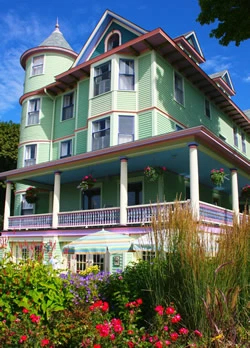
West Bluff on Mackinac Island: The Historic Cottages Most Tourists Walk Right Past
Most Mackinac Island visitors spend their time near Main Street. They browse shops, watch ferries, and enjoy fresh fudge.
A quieter neighborhood waits above the busy downtown area. West Bluff Road runs past grand homes and wide water views.
These homes are called cottages, although many are quite large. Their porches, towers, and gardens reflect island resort life.
This guide explains the area’s history and main features. It also shares simple tips for a respectful visit.
What is the West Bluff?
The West Bluff is an elevated area west of Grand Hotel. Historic cottages extend westward along the bluff-top road.
The homes face the Straits of Mackinac from high ground. Many offer broad views toward the Mackinac Bridge.
West Bluff feels quieter than the streets around the docks. The uphill route also keeps some day visitors away.
Where the neighborhood begins
From downtown, follow Cadotte Avenue toward Grand Hotel. The road rises steadily above the shoreline and shops.
Continue west near the hotel and enter West Bluff Road. The historic cottage row begins around this elevated area.
The exact route may vary around hotel grounds and traffic. Follow posted signs and remain on public roads.
Why many visitors miss it
West Bluff is outside the main shopping and ferry route. Reaching it also requires an uphill walk.
Day visitors often follow the shoreline bicycle loop instead. Others spend limited hours around downtown attractions.
The extra effort creates a calmer and slower experience. Visitors can study details without heavy foot traffic.
How the cottage community began
Mackinac Island became a national park in 1875. Park leaders later offered bluff land through cottage leaseholds.
The first summer cottages appeared on the bluffs in 1885. More homes followed as Mackinac became a fashionable resort.
Families from Midwestern cities wanted cooler summer weather. The island offered fresh air, lake breezes, and social life.
Steamships brought visitors, luggage, workers, and household supplies. Some families stayed for much of each summer.
A summer resort for wealthy families
Many early owners worked in business, banking, and industry. Several families had strong links with Michigan lumber wealth.
Their homes supported long seasonal stays, not short weekend trips. Large kitchens, staff rooms, and stables met those needs.
The cottage community also became part of island society. Families returned yearly and formed lasting summer traditions.
Why large homes are called cottages
During that period, cottage often meant a seasonal residence. The word did not always describe a small building.
Some Mackinac cottages contain many bedrooms and broad living spaces. Their modest label became an island tradition.
Architecture along West Bluff Road
The cottage row contains several late Victorian design styles. No single architect created every home along the road.
Visitors may notice Queen Anne forms, shingle-covered walls, and Carpenter Gothic details. Many homes mix several features.
Wide porches helped residents enjoy fresh air and water views. Towers and bay windows created more viewing spaces.
Charles Caskey and island building
Charles Caskey was an important builder in northern Michigan. He served as the builder for Grand Hotel in 1887.
Caskey also built several island cottages during this period. Some feature cross gables and carved wooden decoration.
However, other builders and architects shaped the West Bluff. Asbury W. Buckley designed several notable island homes.
Details worth noticing
Walk slowly and watch for these common cottage features:
- Deep porches facing the water and afternoon breeze.
- Round or angled towers with pointed or curved roofs.
- Decorative shingles, brackets, railings, and carved trim.
- Bay windows designed to widen indoor water views.
- Carriage houses and former stables behind main residences.
- Stone walls, hedges, gardens, and carefully shaped lawns.
Views from the West Bluff
The high road opens toward the Straits of Mackinac. Water, sky, and passing boats fill much of the scene.
The Mackinac Bridge appears clearly from several open points. Ferry traffic adds movement during the busy travel season.
Late afternoon often brings warm light across the cottages. Sunset can be beautiful when the western sky stays clear.
Views change along the road because trees and homes interrupt sightlines. Do not expect every landmark from every spot.
How to visit West Bluff
Walking is the best choice for a close exterior view. Bicycles and horse-drawn vehicles also use these roads.
Allow about twenty to thirty minutes from central downtown. Your time will depend on pace and starting point.
The climb can feel tiring during warm or humid weather. Wear stable shoes and carry drinking water.
A simple walking route
- Begin near Main Street in central downtown Mackinac Island.
- Walk west and turn uphill onto Cadotte Avenue.
- Follow Cadotte Avenue toward the Grand Hotel area.
- Continue west onto the public West Bluff route.
- Return through the same route or continue toward Hubbard’s Annex.
Best times for a quieter walk
Early morning usually brings softer light and fewer people. The road may also feel cooler before midday heat.
Late afternoon suits visitors who enjoy warmer light. Arrive before sunset and leave enough return time.
Season, weather, and events can affect local traffic. Stay alert for bicycles, horses, and service vehicles.
Photography tips for cottage exteriors
- Photograph from the public roadside or designated viewing areas.
- Use angled views to show porches, towers, and rooflines.
- Avoid blocking bicycles, carriages, or other road users.
- Keep cameras outside private yards and garden entrances.
- Respect residents who may be using porches or lawns.
Respect the cottages as private homes
West Bluff is a living residential neighborhood, not an outdoor museum. Families and guests still use these homes.
Never enter a porch, driveway, yard, stable, or garden. A visible pathway does not make the property public.
Keep voices low and avoid long stops near entrances. Respectful behavior protects the area’s calm character.
West Bluff and East Bluff are different
Mackinac Island has historic cottage areas on both major bluffs. Visitors sometimes confuse their names and locations.
West Bluff begins near Grand Hotel and looks across the Straits. It is known for bridge views and sunset light.
East Bluff rises above downtown and Fort Mackinac. Several viewpoints face the harbor, town roofs, and Lake Huron.
The Michigan Governor’s Summer Residence stands on the East Bluff. The official park page says it is not open publicly.
How the cottages remain part of Mackinac
Mackinac Island is a National Historic Landmark district. Its buildings and landscapes hold national historic value.
The city also adopted a local historic district ordinance. These tools support careful decisions about historic places.
Many bluff cottages began on park leaseholds during the national park years. That special system shaped their development.
Owners have also invested years of care and repair. Preservation depends on both formal rules and personal effort.
A neighborhood that still feels alive
The cottages are not frozen displays from the past. They remain homes used for family life and seasonal visits.
Flowers, porch furniture, horses, and open shutters create daily movement. That living quality makes West Bluff special.
Visitors see history continuing rather than ending. The street connects present island life with Victorian resort traditions.
West Bluff during each season
Spring: Spring brings fresh leaves, cool air, and reopening activity. Some seasonal homes slowly prepare for summer use.
Summer: Summer shows the neighborhood at its busiest and brightest. Gardens grow full, and porches become active spaces.
Fall: Fall adds colored leaves and lighter visitor traffic. Cooler weather makes uphill walking more comfortable.
Winter: Winter creates a quiet and snowy scene. Conditions can be harder, and many island services become limited.
Notable cottages to recognize
Casa Verano
Casa Verano developed in more than one building stage. A smaller structure began on the site in 1888.
The home was rebuilt and expanded in 1892 for Delos and Daisy Blodgett. Architect Asbury W. Buckley led that work.
Its Queen Anne form includes a tower and broad porches. The design also makes strong use of water views.
Cairngorm
Cairngorm is another well-known West Bluff cottage from 1888. Its large scale explains the island’s broad cottage meaning.
The home displays a strong Victorian character and broad porch. A prominent tower also makes its exterior easy to notice.
Edgecliff
Edgecliff dates to 1892 and reflects Queen Anne design. Asbury W. Buckley designed this large, unevenly shaped cottage.
Its towers, porches, shingles, and high setting suit West Bluff. The design focused strongly on views across the Straits.
Plan a slower Mackinac Island stay
West Bluff rewards visitors who leave the busiest streets behind. The walk combines architecture, history, and open views.
Give yourself enough time for the uphill route. Move slowly, remain respectful, and notice the smaller building details.
An overnight stay makes this relaxed pace much easier. You can visit early or return during softer evening light.
Stay at Inn on Mackinac
Inn on Mackinac offers a historic base near downtown attractions. West Bluff can be reached through a pleasant island walk.
Plan your route, wear comfortable shoes, and explore beyond Main Street. Learn more or book through innonmackinac.com.
Category: Mackinac Island