How Do They Build Houses on Mackinac Island?
Mackinac Island is famous for horse-drawn transportation and restrictions on ordinary motor vehicles. That raises an interesting question: how do builders move lumber, stone, equipment, and other supplies to an island where conventional delivery trucks are generally prohibited?
The answer combines careful planning, ferry and freight services, horse-drawn drays, barges for oversized loads, temporary vehicle permits, and work scheduled around the island’s busiest visitor periods. Construction is possible, but it requires more coordination than a typical mainland project.
The Motor-Vehicle Rules Shape Every Project
Mackinac Island’s motor-vehicle restrictions date to 1898 in the village and 1901 within Mackinac Island State Park. Horses and bicycles remain central to transportation, although specific motor vehicles may operate under limited exceptions or temporary permits. This system is part of how Mackinac Island functions without ordinary cars.
Construction equipment is not automatically allowed simply because it is required for a project. Contractors must obtain the appropriate city approval. Current city rules require permitted vehicles to follow approved routes and conditions. Vehicle movement must be scheduled in advance and escorted by Mackinac Island Police. Restrictions may also apply during school travel hours and other busy periods.
These requirements protect pedestrians, cyclists, horses, historic streets, and the island’s car-free character. They also mean builders must coordinate equipment movement before work begins.
How Construction Materials Reach the Island
Construction supplies reach Mackinac Island through more than one transportation method. Many ordinary materials and smaller items arrive through the established ferry and freight system. Horse-drawn drays collect freight from the docks during the operating season and move it to businesses, homes, and job sites. A similar process is used for mail and package delivery on Mackinac Island.
Large machinery, modular building sections, and oversized materials may require a barge. Once an item reaches the island, its final journey depends on its size and the permits attached to the project. Some supplies can travel by wagon, while heavy equipment may move under controlled motor-vehicle authorization.
Winter freight can be affected by ferry schedules, weather, and ice conditions. City planning material notes that construction freight may come from ferry docks during the operating season and through the airport during winter. It is therefore inaccurate to say every item must arrive by barge or that all deliveries stop as soon as ice forms.
Horses and Drays Remain Essential
As many as approximately 600 horses may be present on Mackinac Island during the peak visitor season, although the number changes throughout the year. Many pull passenger carriages, while dray teams transport packages, groceries, furniture, building supplies, and other freight.
A load that would normally travel directly to a mainland job site by truck may need to be divided into manageable wagon loads. Contractors must consider weight, road conditions, delivery routes, unloading space, and the needs of working horses. This carefully managed system makes accurate ordering and staging especially important.
When Barges and Modular Sections Are Used
Barges are valuable for items too large or heavy for routine ferry freight. Heavy machinery and oversized structural components can cross the Straits of Mackinac under a coordinated plan. Weather, marine conditions, permit requirements, and dock availability can affect timing.
Modular or prefabricated sections are one available construction option, but they are not used for every island house. Mackinac Island’s vehicle rules specifically address movement of modular house sections. These loads require an additional escort using equipment capable of helping clear the road if a section creates an obstruction.
Prefabrication may reduce some on-site work, but it also requires precise design, transportation planning, and careful handling. Builders select the method that fits the property, materials, historic requirements, and available access.
Why Much of the Work Happens in the Off-Season
Construction is not prohibited during summer, and it would be inaccurate to say building happens only in winter. However, many disruptive projects and major renovations are concentrated in the quieter off-season, generally from November through April.
During these months, there are fewer visitors, many seasonal businesses are closed, and crowded streets are less likely to be affected. Winter construction brings its own challenges, including cold temperatures, snow, wind, limited daylight, transportation changes, and the need to protect materials.
Historic Buildings Require Additional Care
Much of Mackinac Island’s built environment contributes to its historic character. Projects may need city building and zoning approval, while work in protected areas can face additional design or preservation review. Owners and contractors should consult the City of Mackinac Island and relevant historic authorities before making assumptions about permitted exterior changes.
Historic buildings may require specialized materials and skilled craftsmanship. Replacement windows, siding, porch details, roofing, and structural repairs may need to respect the established appearance.
Why Island Construction Can Take Longer
Several factors can extend an island construction schedule:
- Materials must cross the water or arrive through another approved freight route.
- Freight may need to be divided into horse-drawn wagon loads.
- Oversized items and motorized equipment require permits, scheduling, and escorts.
- Weather and transportation conditions can affect deliveries.
- A missing part cannot always be collected quickly from a mainland supplier.
- Historic and local approvals may influence materials and design.
These factors can increase costs, although the exact difference varies by project. Each project should be evaluated individually rather than assuming every island build follows the same timetable or cost formula.
What Visitors May Notice
Most visitors see only small signs of this complicated system. A horse-drawn wagon may carry lumber along Market Street, or a barge may unload equipment near the waterfront. During quieter months, scaffolding and renovation work may appear around hotels, shops, and private buildings.
These scenes show how the island supports modern services such as electricity and running water while preserving its unusual transportation traditions.
A Note About Inn on Mackinac
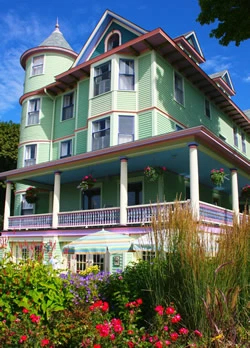
The historic building associated with Inn on Mackinac dates to 1867. It should not be claimed that every part of the original building arrived by barge or was hauled behind horses unless historical records establish that detail. Today, maintaining an older island property requires careful planning that respects both the building and the island’s transportation rules.
Conclusion
Houses and other buildings are constructed on Mackinac Island through a coordinated network of ferry freight, horse-drawn drays, barges for oversized loads, carefully permitted equipment, and skilled crews. Many larger projects are scheduled during the quieter off-season, but construction is not limited exclusively to winter. Each project’s transportation plan depends on its materials, location, permits, weather, and historic requirements.
Understanding this process makes the island’s homes, hotels, and Victorian architecture even more impressive. Every completed project reflects detailed planning and a transportation system designed to preserve Mackinac Island’s distinctive car-free environment.
Category: Mackinac Island