Mackinac Island vs. Nantucket: Cost, Crowds, and Charm
Put photos of Mackinac Island and Nantucket side by side and you could be forgiven for mixing them up. Both are island destinations commonly reached by ferry, with white clapboard houses, flower boxes, and historic downtown streets. Both have built their whole identity on protecting that look. Yet the two trips feel nothing alike once you start booking, and the gap in what you pay is big enough to change your plans. Here is an honest look at how the two compare on history, travel time, cost, crowds, and how you get around.
Two Islands, Two Very Different Centuries
These islands were built by completely different industries, and that history still shapes what you see. Nantucket made its money on the open ocean, while Mackinac Island made its money on inland trade routes and later on summer tourism. Both later experienced slower periods of growth, which helped many older buildings survive. That is why they look like cousins even though they grew up two worlds apart.
Nantucket: Built by Whale Oil
For much of the 1700s and early 1800s, Nantucket was the whaling capital of the world, and the town you walk through now was paid for with whale oil money. Residents bought and laid the Main Street cobblestones in 1838 because they were tired of the mud. When whaling declined in the mid-1800s, economic activity and population fell, slowing new development. That slump is the reason so many original homes survived. Today the whole island is a National Historic Landmark district, and a local board reviews changes to buildings right down to paint colors.
Mackinac Island: Furs, Forts, and Victorian Summers
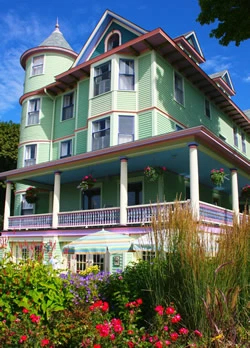
Mackinac Island’s story runs through the fur trade and two forts long before tourism showed up. By the late 1800s, wealthy families from Chicago and Detroit were arriving by steamship and building the big porched cottages you still see on the bluffs. The federal government created Mackinac National Park in 1875. Michigan created Mackinac Island State Park in 1895. Today, the state park covers more than 80 percent of the island. Park protection, preservation efforts, and tourism helped retain many historic buildings and landscapes. Our guide to the architecture of Mackinac Island covers how that look was protected.
Getting There: Ferries, Flights, and Drive Time
Neither island has a bridge, so both trips end with a boat ride or a short flight. That is where the likeness stops. Mackinac Island sits a few miles off the northern tip of Michigan’s Lower Peninsula, and you drive to the ferry docks straight up Interstate 75. Nantucket sits about thirty miles out into the Atlantic, well past Cape Cod. How far you live from each one may matter more than anything else on this list.
What the Ferry Actually Costs
This is the widest gap between the two islands. A 2026 adult round trip to Mackinac Island runs about $37 on Arnold Transit and about $39 on Shepler’s, plus a small online fee. A 2026 adult round trip on the fast Nantucket ferry runs closer to $93 on the Steamship Authority and about $97 with Hy-Line Cruises. Nantucket does offer a cheaper same-day weekday fare near $69, and the slower boat costs less than the fast one. Even so, the high-speed Nantucket crossing generally costs substantially more per passenger than the Mackinac crossing. Our Mackinac Island ferry price guide breaks down the Michigan side.
How Far You Have to Travel First
Travel time before the boat is the other half of the math. Mackinac Island is accessible by road and ferry from much of the Midwest. The mainland docks are roughly four to five hours from Detroit and about seven hours from central Chicago, depending on traffic and the chosen route. Nantucket usually means flying into Boston, driving out to Hyannis, then catching a ferry, which can fill a whole day. Nantucket does have its own airport with seasonal direct flights from several East Coast cities, and that shortcut helps if the fare works for you. Mackinac Island Airport accommodates charter and private flights, although most visitors arrive by ferry.
What a Trip Costs Once You Arrive
Ferry fares are only the opening bid. Once you step off the dock the cost gap gets wider, and lodging is where most travelers feel it. Both islands have a short, busy season and a limited number of rooms, which pushes prices up. That pressure is much stronger on Nantucket, where much of the housing is private summer property rather than something you can book for three nights.
Lodging Is the Biggest Gap
Peak-summer lodging on Nantucket often costs substantially more than lodging on Mackinac Island. Actual prices vary by property, room type, booking date, and travel dates. Mackinac Island is not cheap either, and July and August rooms are priced for the season. Mackinac Island offers a broad range of lodging, from historic inns to family-oriented hotels. Travelers should compare live rates for their exact dates. If budget decides your trip, this is the line item that decides it.
Food, Bikes, and Everything Else
Daily spending follows the same pattern, just less sharply. Nantucket restaurants price like a high-end resort town with one short season to make their year, and dinner for two adds up fast. Mackinac Island has plenty of sit-down restaurants at island prices, but it also has fudge shops, lunch counters, and pasty windows that keep a day cheap. Bike-rental prices vary by operator, bicycle type, and rental period on both islands. Museum and attraction tickets are modest in both places.
Crowds, Size, and How the Islands Feel
Here is the surprise for most first-time visitors: Nantucket is far bigger than Mackinac Island, and it has a real year-round town rather than a seasonal one. Mackinac Island packs a huge number of people into a small downtown for a few hours, then empties out when the last boats leave. Nantucket spreads its crowds over a much larger landscape, so the pressure lands differently even though the numbers are high.
Nantucket Is Bigger and Busier Than You Think
Nantucket covers roughly 48 square miles and had about 14,255 year-round residents at the 2020 census, with newer estimates running higher. The population rises sharply during summer as seasonal residents and visitors arrive. Published peak estimates vary, so travelers should rely on current local information. Traffic is a real problem in town during August. The upside is that the island is big enough to absorb people, so beaches on the far end can still feel open and windswept on a busy weekend.
Mackinac Island Concentrates Everything Downtown
Mackinac Island is about 3.8 square miles with fewer than 500 year-round residents, and roughly 80 percent of it is state park. Nearly all the shops, restaurants, and hotels sit along a few blocks of Main Street, which is why downtown feels packed on a July afternoon when several ferries unload at once. Walk ten minutes uphill or ride out along the shoreline road, though, and the crowds thin fast. Evenings after the day-trippers leave are one of the best parts of staying overnight.
Cars, Bikes, and Getting Around
This is where the two islands differ in kind rather than degree. Nantucket allows cars, and plenty of residents drive, but bringing your own over on the ferry is costly and parking in town is scarce, so most visitors skip it. The island backs that up with more than 35 miles of paved bike paths, a seasonal shuttle bus, taxis, and ride-share. Mackinac village banned automobiles in 1898, and the State Park Commission extended the restriction to park roads in 1901. Limited exceptions remain for authorized vehicles. Most visitors walk, bicycle, or use a horse-drawn carriage. The result is an island with very little engine noise. Limited emergency, utility, construction, and service vehicles operate under authorization. For the background, see why Mackinac Island is car-free.
Seasons: When Each Island Is at Its Best
Both islands run on a short season, and both reward travelers who come just outside the peak. Nantucket’s shoulder months are May, June, September, and October, when restaurants are open, rates drop, and the beaches are quiet. Its two signature events sit at the edges of the calendar: the Daffodil Festival in late April and the Christmas Stroll in early December. Mackinac Island’s season generally runs May through October, with the Lilac Festival in June and a lovely, underrated stretch of color in early fall. Winter is the sharper contrast, since Nantucket keeps working as a town while Mackinac Island shrinks to a few hundred people and a very quiet main street. Our shoulder-season travel tips are a good place to start on timing.
Conclusion
Choose Nantucket if you want the Atlantic, wide sandy beaches, a serious restaurant scene, and a bigger island to explore, and if the budget for all that is comfortable. Choose Mackinac Island if you want the car-free experience, a much lower total cost, an easier trip from anywhere in the Midwest, and a downtown you can cover on foot. Families and first-time island travelers tend to have an easier time on Mackinac, because the logistics are simpler and the price of entry is lower. If you like this kind of head-to-head, we also compared Mackinac Island and Martha’s Vineyard, the closest East Coast match of all.
If Mackinac Island sounds like the right pick, staying on the island rather than day-tripping is what turns a nice visit into a real one. Inn on Mackinac sits right on Main Street in a restored 1867 Victorian, a convenient walk from the ferry docks and the shoreline bike route, which means quiet porch mornings and empty streets after the last boats pull away. Book your stay with Inn on Mackinac and see how the car-free island compares for yourself.
Category: Mackinac Island