Can You Buy a House on Mackinac Island?
Somewhere around the second evening of a Mackinac Island trip, usually while walking back from dinner past a row of porches with the lamps just coming on, someone says it out loud. What would it take to actually live here? It is a natural thought on an island where the loudest sound after nine o’clock is a horse walking home.
The short version is that yes, private property exists on Mackinac Island and it does change hands. The longer version is that buying here works almost nothing like buying on the mainland. The supply is tiny, the ways of owning are unusual, the approval process has real teeth, and the cost of doing anything to a building is far higher than most buyers expect. None of that makes it impossible. It simply means the people who end up owning a place here have usually spent years learning how the island works.
Yes, But Only on a Small Slice of the Island
The first thing to understand is how little of Mackinac Island is available at all. Roughly 1,800 acres, about eighty percent of the island, sits inside Mackinac Island State Park and is not for sale at any price. That protected land is why the island looks the way it does, and it is also why the private market is so small. Everything that can be bought and sold sits in the remaining fifth: the downtown blocks, the bluffs, a few inland lanes, and the shoreline pockets outside the park. Add a 2020 U.S. Census population of 583 and you have a market where a busy year might see only a handful of real sales. Our guide to who owns Mackinac Island and how public access works covers that split in detail.
Three Very Different Ways to Own Here
Buying Private Land Outright
The simplest path is also the rarest. There is true private property on the island, including homes in town, houses along the inland roads, and empty buildable lots that come up for sale now and then. These sales look familiar on paper, with a deed, a title search, a closing and an ordinary Michigan tax bill afterward. What is not familiar is the supply. At any given moment the island usually has only a small handful of listings, and many of the best places never appear publicly at all because they pass quietly between families and neighbours. Serious buyers tend to get to know one of the island’s few brokers and then wait, sometimes for years.
Leasing a Cottage Site from the State Park
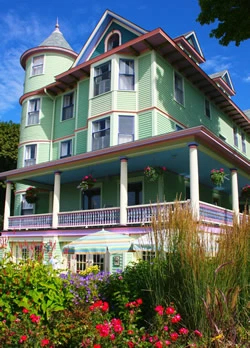
The grand cottages that everyone photographs work in a completely different way, and it surprises most people. Some historic cottages stand on state-owned land administered by the Mackinac Island State Park Commission. In these arrangements, an owner may own the cottage while leasing the land beneath it. The lease system dates to Mackinac National Park, before the property became Michigan’s first state park in 1895. Because lease conditions and transfer requirements can change, buyers should confirm the current terms directly with the Park Commission and obtain qualified legal advice before making an offer. Our piece on the Victorian and Colonial styles that define the island is a good place to start.
Condominiums and Smaller Options
Not every route onto the island runs through a seven-figure cottage. There are condominium developments and smaller homes, some of them newer, that sell more often than the historic houses and cost far less to get into. They suit buyers who want a reliable island base without the upkeep of a hundred-and-thirty-year-old building, and they are often the answer for someone who comes for a few weeks each summer rather than the whole season. Association rules vary, and some limit how and when a unit can be rented, so those papers are worth reading closely. For many families this is the realistic version of the daydream.
What Island Property Actually Costs
Prices here are hard to pin down, because a market with only a few sales a year swings wildly depending on what happened to sell. Listings range from condominiums and smaller homes to high-value historic cottages, but the small number of transactions makes broad price averages unreliable. Vacant buildable land is also limited. Buyers should compare recent, genuinely similar sales and work with professionals who understand island property, state-land leases, zoning, and seasonal access. Anyone shopping seriously should look at real comparable sales with a broker who works the island, because the averages in online estimates do not describe this place.
Building or Renovating Is a Different World
Getting Materials Across the Water
Every board, shingle, window and bag of mortar that goes into an island building arrives by boat. Materials are trucked to St. Ignace or Mackinaw City, loaded onto a barge or ferry, brought across the Straits, and then moved to the site by horse-drawn dray, because no delivery truck is waiting on the other end. That chain adds cost and time to everything, and it turns small mistakes into costly ones, since a forgotten item cannot be picked up that afternoon. Builders order in large batches and store materials carefully, which is why island work runs on longer timelines. These logistics usually add time and expense, but the final cost depends on the site, design, materials, labor availability, and transportation plan. A local contractor should provide a project-specific estimate.
A Short Season and Few Contractors
The island’s building calendar is squeezed from both ends. Serious outdoor work wants the stretch from late spring to autumn, and crews who push into the cold months end up tenting and heating their sites, which costs more again. Only so many builders, carpenters, masons and electricians live and work on the island, and in summer many are already booked by the hotels and restaurants that have to be ready for guests. That makes scheduling a much bigger deal than it would be at home. New construction is limited, so buyers should expect permitting and scheduling to require careful advance planning.
Historic District Review
The City of Mackinac Island has several designated local historic districts. The Historic District Commission reviews proposed exterior work on properties within those districts. That covers far more than a full rebuild. Changing a roofline, replacing windows, altering a porch, adding an outbuilding, and in many cases even changing a paint colour can need a review, with photographs of the site, the street, the water view where it matters and every side of the building. Site plan review and zoning approvals run alongside it, with their own rules on lot use and extra dwellings. It is a real process rather than a formality, and it is exactly why the island still looks like itself. Our look at the preservation work that keeps the island historic explains what that system protects.
The Rules That Surprise New Owners
Plenty of things about island homeownership only become clear once you are in it. There is no car in the garage because there is no car and often no garage, so groceries, luggage and furniture all arrive by bicycle, dray or your own arms. Heating oil, propane and supplies have to be ordered ahead of the season rather than whenever you run low. Winter repairs fall on you in a place where getting a crew out in February is genuinely hard, and an empty house through a Straits winter needs someone reliable checking on it. Rubbish, deliveries and even mail follow island systems rather than mainland ones. None of this puts off the people who love it here, but it does explain why island homes tend to attract buyers who have already spent many seasons visiting.
Renting Your Cottage Out
Do not assume that every property can be used as a short-term rental. City requirements, zoning, state-land lease conditions, condominium rules, safety standards, and applicable taxes may all affect what is permitted. Exterior alterations within a designated historic district may also require review. Before relying on rental income, confirm the rules for the specific property with the City, the association or lessor, and qualified tax and legal professionals.
What Owners Say Makes It Worth It
Ask anyone who has done it and the answer is rarely about money. It is about walking home from dinner in the dark with no headlights, knowing the ferry crews by name, and sitting on a bluff porch in late September when the crowds have thinned and the lake turns a particular shade of grey-blue. It is also about care, because owning one of these houses means looking after something that has stood through more than a century of island history. That is a very different thing from buying a holiday condo, and the people who thrive here wanted the responsibility as much as the view. If the historic homes are what draw you, the cottages of the West Bluff are the best place to start looking closely.
Start with a Long Stay Before You Start Shopping
If the idea of owning a piece of Mackinac Island has taken hold, the smartest first step is not a call to a broker. It is a longer, slower visit, ideally outside the busiest weeks, when you can walk the bluffs in the quiet, watch how the island handles a rainy Tuesday, and picture the place without a return ferry booked. Inn on Mackinac gives you a comfortable downtown base to do exactly that, with harbour views from the porch and the whole island within walking distance. Come book your stay with Inn on Mackinac, spend a week at island pace, and find out whether the daydream holds up in daylight.
Category: Mackinac Island